
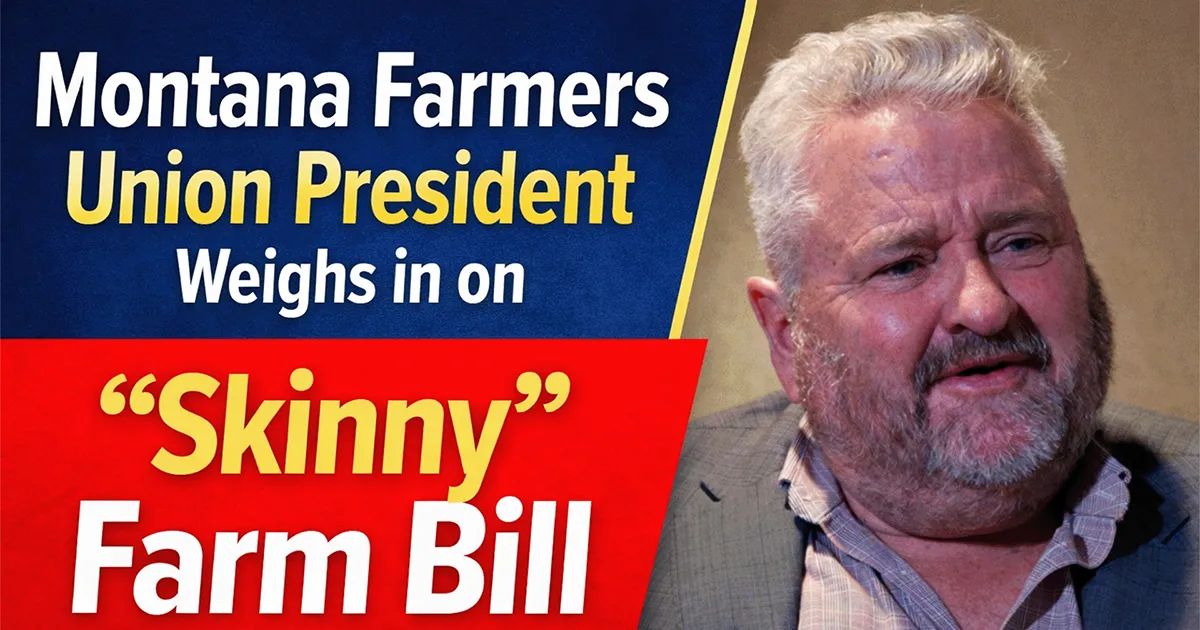
Montana Farmers Union President Weighs in on "Skinny" Farm Bill
March 10, 2026
Farm Bill 2.0 was a major topic of discussion at this year’s National Farmers Union Convention, where farm policy and market competition dominated conversations among farmers and ranchers from across the country.
Last week in Washington, Republicans were able to advance a version of the farm bill to the U.S. House Agriculture Committee with support from several Democrats, despite some partisan disagreements. While that step marks some movement on long-delayed farm legislation, farm groups say the proposal still falls short.
Montana Farmers Union President Walter Schweitzer says the measure being discussed is essentially a “skinny farm bill” that lacks significant reforms.
“There is some movement—not a lot,” Schweitzer said. “They call it a skinny farm bill, and I think for good reason because it’s pretty skinny. I don’t see a lot of really big changes.”
One provision raising concern for Farmers Union leaders involves language known as A-Plus, which Schweitzer says could allow greater consolidation in the cattle industry.
According to Schweitzer, the language would allow large corporate cattle feeders and even auction markets to own packing plants—something he says runs counter to the intent of the Packers and Stockyards Act, which was designed to prevent excessive vertical integration in the livestock sector.
“I really don’t think that corporate feeders should be allowed to be packers,” Schweitzer said. “And I really don’t think auction yards should be owning a packing plant. It will question the integrity of that auction yard.”
Schweitzer also argues that passing a new farm bill is long overdue, saying current farm policy is leaving producers in a difficult financial position.
“Right now, producers are looking at their options and growing the crop that loses them the least amount of money,” he said. “That’s not a very good option, is it? And we got here because of farm policy.”
He believes decades of policy focused primarily on maximizing production have contributed to the problem.
“For 40 years or more we’ve had farm policy based on maximum yields,” Schweitzer said. “Maximum yields require maximum inputs, they produce surpluses—and the ones who benefit from that are the corporate monopolies.”
As debate over the next farm bill continues, Farmers Union leaders say addressing concentration in agriculture will remain a top priority for farmers and ranchers across the country.
Source: Ag Information Network/Western Ag Network


