.png?fit=outside&w=1280&h=720)
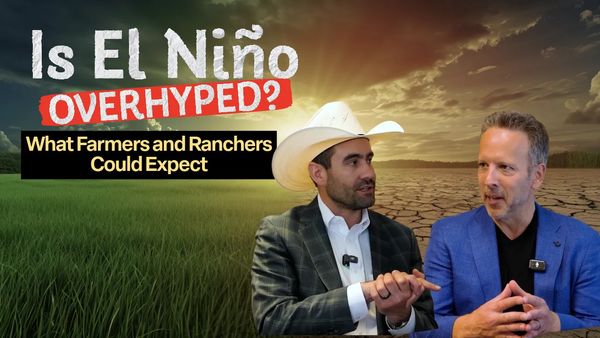
Is El Niño Overhyped? What Farmers and Ranchers Could Expect This Summer
May 31, 2026
As drought concerns continue across portions of Montana and the Northern Plains, many producers are hearing increasing discussion about El Niño and what it could mean for weather conditions this summer.
But according to meteorologist Brian Bledsoe, some of the headlines may be getting ahead of the science.
Speaking with Lane Nordlund on the LaneCast Ag Podcast during the Montana Stockgrowers Association MidYear Meeting, Bledsoe said El Niño is receiving more attention than it likely deserves for the summer months.
While Bledsoe believes some of the public discussion has become exaggerated, he emphasized that a strong El Niño is indeed developing.
"The ocean and the atmosphere are already talking and we're progressing forward," he said. "It is going to be a strong one."
However, he cautioned against some of the extreme claims circulating online and on social media predicting historic impacts.
"I've been seeing a lot of this stuff that says this is going to be the worst El Niño and the worst impact since 1877," Bledsoe said. "I think we need to pump the brakes a little bit."
For Montana ranchers and farmers, Bledsoe said the bigger story may not be El Niño itself, but rather whether the state can continue receiving timely rainfall through June.
A weather system expected to bring meaningful moisture to portions of Montana could help establish favorable conditions heading into summer.
"If we can get a little bit more of that rain in the eastern third of the state, that would be even better because they've been a little bit dry there," he said.
Historically, some El Niño years have featured drier-than-normal conditions across portions of the Northern Plains during June, particularly in northern Montana. But beyond June, Bledsoe believes the outlook becomes less concerning.
"After we get out of June, we kind of open things up a little bit more," he explained. "We get more regular storms and monsoonal moisture coming up from the southwest."
Areas of eastern and southeastern Montana currently experiencing dryness could remain the most vulnerable, while western portions of the state could see periods of warmer and drier conditions later in the season.
"I don't see evidence of something big, awful and scary that's going to persist for month after month after month," he said.
Still, Bledsoe believes producers should remain cautiously optimistic while monitoring conditions closely.
Perhaps Bledsoe's most important message centered on decision-making during uncertain weather patterns.
He encouraged producers to avoid reacting too quickly to alarming forecasts and social media speculation.
"Over the past six months, I've been 80 percent therapist and 20 percent meteorologist," Bledsoe joked.
His advice: know your deadlines, stay informed, and wait as long as practical before making major management decisions.
"The more you can let the game come to you, the better off you're going to be," he said.
He also urged producers to carefully evaluate the information they consume.
"There's so much trash on social media and the internet," Bledsoe said. "The amount of information we have at our fingertips is amazing, but the amount of disinformation we have at our fingertips is also pretty amazing."
While a strong El Niño is developing, Bledsoe says producers shouldn't let fear-driven headlines dictate management decisions. The next several weeks remain critical for soil moisture, forage production, hay supplies, and crop conditions across Montana.
For now, the focus remains on timely rainfall and staying grounded in reliable weather information rather than chasing the latest viral forecast.
Source: Western Ag NEtwork


