.png?fit=outside&w=1280&h=720)
Common Ground Tackles Livestock Industry Challenges
August 12, 2026
What began in Montana as a series of 13 regional listening sessions focused on improving producer profitability has grown into a national movement aimed at strengthening the future of American agriculture.
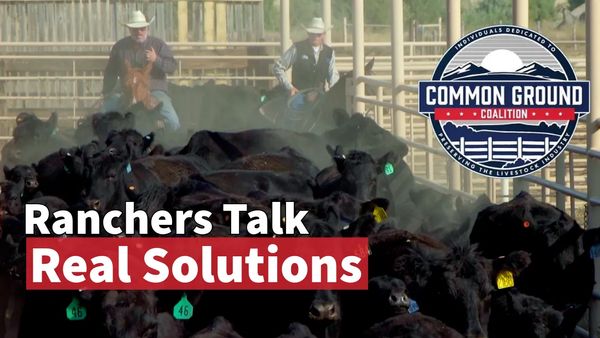
Livestock producers representing much of the eastern half of the United States gathered in Nashville for the third Common Ground Regional Summit, bringing together diverse backgrounds, production systems and perspectives to identify shared priorities affecting ranchers, rural communities and America's food security.
"It's really started as a grassroots effort," said Turk Stovall, a Common Ground founding member from Montana. "We wanted to hear directly from producers across rural Montana about what they needed to keep their operations going. That framework has now grown to a national scale."
During the Eastern Regional Summit, participants identified 12 key priorities they believe should be addressed. Among the top concerns was improving access to capital, financing and ownership opportunities for cow-calf producers and the next generation of livestock operators.
For Lindsey Grimes Hall of Maplecrest Farms in Ohio, the discussion centered on whether current lending and assistance programs accurately reflect today's agricultural landscape.
"We talked about redefining what an emerging producer is," Hall said. "I've been filing a Schedule F since I was 18 and have been involved in agriculture my entire life. Because of that, I'm no longer eligible for many programs, even though I'm just now moving into a leadership role in our family operation and looking to expand. We need to make sure these programs better serve producers in that stage of life."
Throughout the summit, producers worked in small groups to identify priorities, present recommendations and develop action plans designed to create meaningful change.
Ben Neale of Light Hill Meats in Tennessee said those smaller discussions helped participants move beyond regional differences.
"When you're in a small group, you have much more thoughtful discussions," Neale said. "You hear from producers with completely different operations, but you realize we're all trying to accomplish the same things."
Neale said one of the summit's defining characteristics was its commitment to true consensus.
"If someone wasn't comfortable with an idea, it stayed on the table until everyone was comfortable with it—or it was removed," he said. "That commitment to finding common ground was different than anything else I've been part of."
Joe Goggins, another Common Ground founding member from Montana, said the summit reinforced just how much agreement exists across the livestock industry.
"It's really encouraging to see folks come together," Goggins said. "No matter what region of the United States we live in, we agree on about 95 percent of the things we need. Too often, we spend our time fighting over the five percent that divides us."
One more Common Ground Regional Summit is scheduled for August 26–28 in Fort Worth, Texas, where producers from the western half of the country are expected to gather to continue refining priorities and recommendations for the future of the livestock industry.
Western Ag Network


