Expanded Public Lands Grazing as a Wildfire Suppression Solution
November 11, 2026
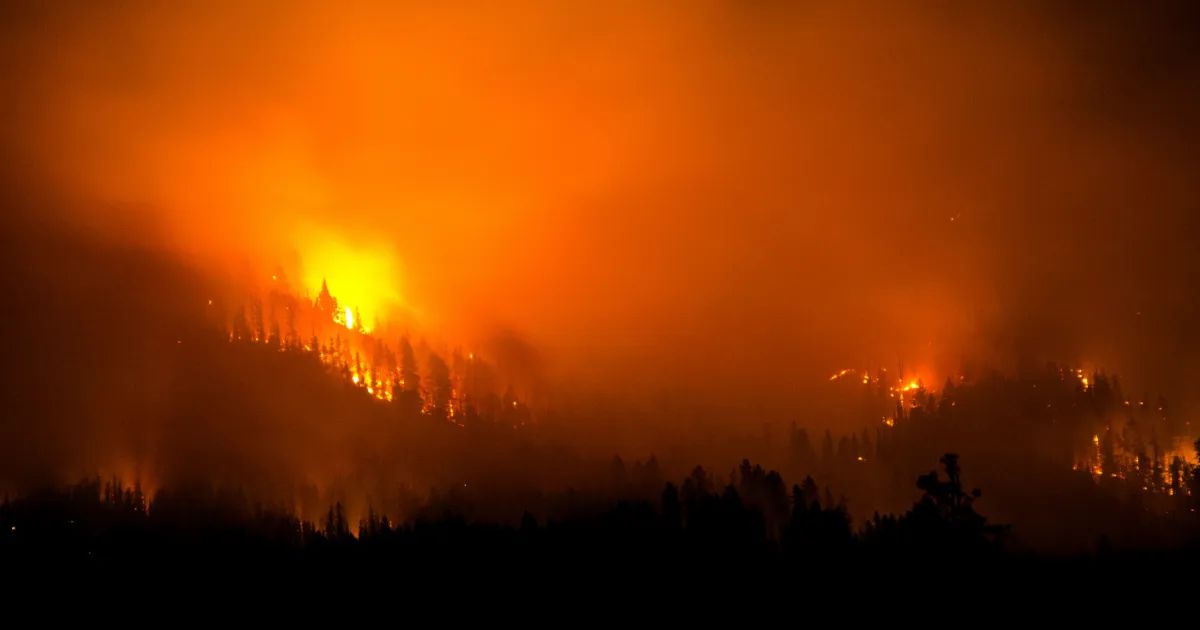
BOZEMAN, Mont. - As wildfire seasons become more challenging across the western United States, attention is increasingly being placed on land management practices that can help reduce risk and improve landscape health. Livestock grazing is an essential wildfire mitigation tool that can significantly reduce wildfire risk, wildfire severity, and suppression costs across the western United States.
Caroline Roeder Helle is a Montana native from Choteau, an applied economist, and a graduate of Montana State University (MSU) whose research has helped advance the conversation around livestock grazing as a practical tool for wildfire mitigation across the West. Through her master's thesis and subsequent research, she found that increased livestock grazing can significantly reduce wildfire risk and suppression costs by lowering available vegetation fuels on public lands.
Working alongside Nicole Karwowski, Assistant Professor at MSU’s Department of Agricultural Economics, and Randal Rucker, Professor Emeritus at MSU’s Department of Agricultural Economics, Helle’s study shows that a 10-percentage point increase in grazing activity was associated with a 12.6% reduction in total wildfire area burned and an 11.9% reduction in acres burned at high severity. It is also estimated that livestock grazing contributes to approximately $324 million in annual wildfire suppression savings across western National Forests by reducing fine fuels such as grasses and other vegetation that can accelerate fire spread.
"Montana ranchers have understood for generations that livestock are an important part of maintaining healthy landscapes," said Caroline Helle. "Cattle and sheep don't just produce food and fiber, they actively help manage the vegetation that fuels many wildfires. This research reinforces what producers who rely on public grazing allotments have observed firsthand for years: grazing is a practical, effective and cost-efficient tool that should be part of any comprehensive wildfire prevention strategy."
As a producer with direct experience utilizing public grazing lands, Helle said responsible grazing management benefits both working agricultural operations and the long-term health of western landscapes.
"Every year we see livestock convert grasses and other fine fuels into a valuable agricultural product while reducing the amount of combustible material left on the ground," Helle said. "When managed appropriately, grazing helps create more resilient landscapes and complements other land management tools available to agencies."
Helle’s research also showed that the greatest wildfire-reduction benefits occurred in the Southwest and Intermountain West, regions that face some of the nation's highest wildfire risks. The study also concluded that grazing and prescribed fire are not necessarily competing management approaches, suggesting that grazing can serve as a complementary strategy alongside existing fuels reduction programs.
The report noted that approximately 12.8 million acres of western National Forest land that historically supported grazing are currently ungrazed. By returning those acres to active grazing could reduce wildfire areas burned by roughly 10%, decrease high-severity fire by nearly 10% and lower annual suppression costs by an estimated $57 million.
Helle said those findings should prompt broader discussion about how federal agencies manage public lands.
"Too often, grazing is viewed only through the lens of agricultural production," Helle said. "What this research demonstrates is that public land grazing delivers significant public benefits. Producers, taxpayers, rural communities, recreationists and wildlife all benefit when we reduce catastrophic wildfire risk and keep working landscapes healthy."
The Montana Farm Bureau Federation (MFBF) supports state and federal leaders further pursuing policies that support strategic grazing management, maintain access to public lands for livestock producers, and streamline unnecessary regulatory barriers that prevent grazing from being utilized as a wildfire mitigation tool.
“We commend the researchers for their work and dedication to addressing issues that matter to agriculture,” said Scott Kulbeck, Executive Vice President of MFBF. “The study validates observations that producers have shared for generations, while providing the evidence needed to inform policy and management decisions. It is a powerful example of why land-grant universities remain so vital, conducting research that strengthens farms, ranches, natural resources, and rural communities across Montana.”
By combining agricultural economics with natural resource management, Helle's work has provided policymakers, land managers, ranchers, and agricultural organizations with data supporting the role of livestock grazing as a cost-effective strategy to reduce fuel loads, improve rangeland health, and help mitigate catastrophic wildfires throughout the West. Her research has become an important contribution to ongoing discussions about public lands management, wildfire prevention, and the value of working landscapes.
"Montana's ranching families are committed stewards of the land," Helle said. "As wildfire seasons grow longer and more costly, policymakers should embrace management practices that have been proven to reduce risk. Expanding livestock grazing on public lands is one of those solutions."
Founded in 1919, the Montana Farm Bureau Federation is a grassroots organization leading Montana agriculture toward a future with a prosperous ag economy and thriving rural communities. For more information, visit mfbf.org.
Source: Montana Farm Bureau


