
Trump Administration Releases New Dietary Guidelines Urging Americans to Eat More Real Food
WASHINGTON, D.C., January 7, 2026 – Actual food and protein is front and center in the newly released Dietary Guidelines for Americans. Released Jan. 7 by U.S. Secretary of Agriculture Brooke Rollins and U.S. Secretary of Health and Human Services Robert F. Kennedy, the secretaries said the new guidelines are a return to the basics, common sense, scientific integrity, and a shift away from highly processed foods and federal incentives to promote the foods that have led to chronic diseases.
According to the introduction letter, nearly 90% of health spending goes to treat people with chronic diseases as a result of the standard American diet which is reliant on highly processed foods and coupled with a sedentary lifestyle.
The secretaries said, “We are realigning our food system to support American farmers, ranchers, and companies who grow and produce real food—and the Trump administration is working to ensure all families can afford it.”
The guidelines include recommendations to consume dairy, including full-fat dairy with no added sugars as well as prioritizing protein, including animal sources including eggs, poultry, seafood, and red meat, as well as plant-sourced protein foods, including beans, peas, lentils, legumes, nuts, seeds, and soy.
The previous guidelines recommended 13 to 56 grams of protein per day, or 5% to 35% of calories. Notably, the new recommendation is based on body weight and recommends 1.2 to 1.6 grams per kilogram, the equivalent to 81.6 to 109 grams for a 150-pound person.
With respect to adding fats to meals, the guidelines “prioritize oils with essential fatty acids, such as olive oil. Other options can include butter or beef tallow.”
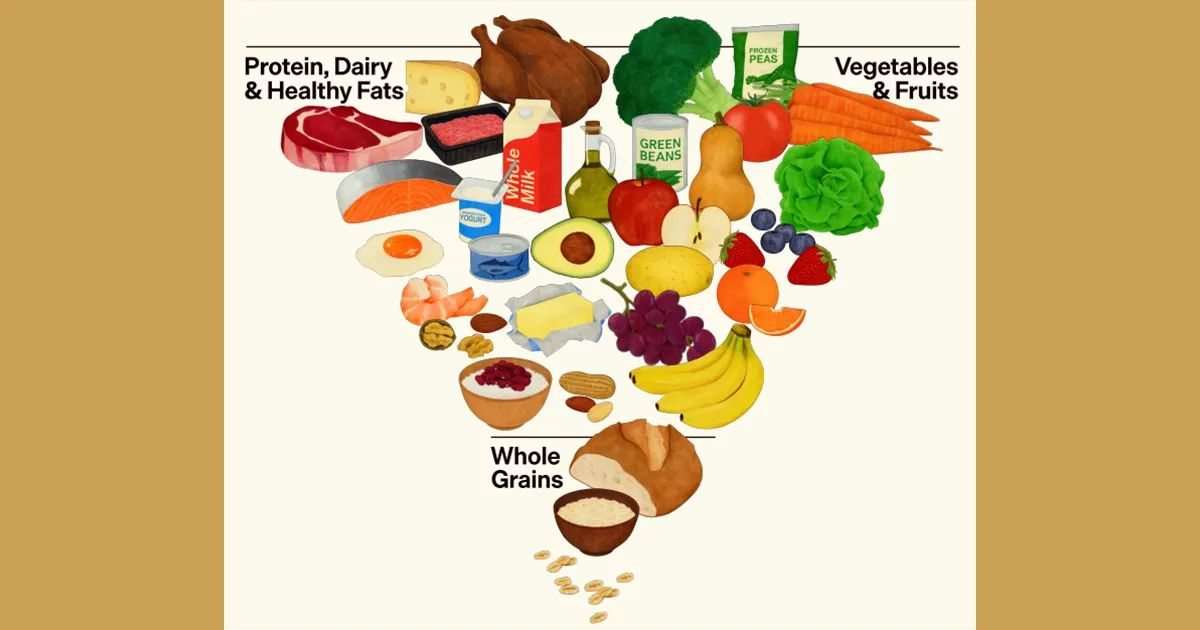
Gone is the image of the plate to illustrate the portion of a dinner plate that should be filled with fruits, grains, vegetables, protein, and dairy. The updated version is an inverted pyramid that puts meats, cheese, and vegetables at the top.
The Meat Institute responded to the recommendation that prioritizes consumption of more protein which can be sourced from meat and poultry.
“We are pleased the Dietary Guidelines recommend Americans prioritize protein and that families can get that protein from nutrient dense meat and poultry. Secretary Rollins and Secretary Kennedy’s leadership have simplified the Dietary Guidelines making it clear that meat is a protein powerhouse which plays a vital role in healthy diets,” said Meat Institute President and CEO, Julie Anna Potts. “Robust scientific evidence demonstrates that meat is a rich source of high-quality protein, essential vitamins, and highly bioavailable minerals that support human health throughout the lifespan.”
The American Medical Association applauded the new Dietary Guidelines for “spotlighting the highly processed foods, sugar-sweetened beverages, and excess sodium that fuel heart disease, diabetes, obesity, and other chronic illnesses.”
The previous Dietary Guidelines were 186 pages long, whereas the new guidelines are 10 pages.
Source: Western Ag Network-Rachel Gabel


