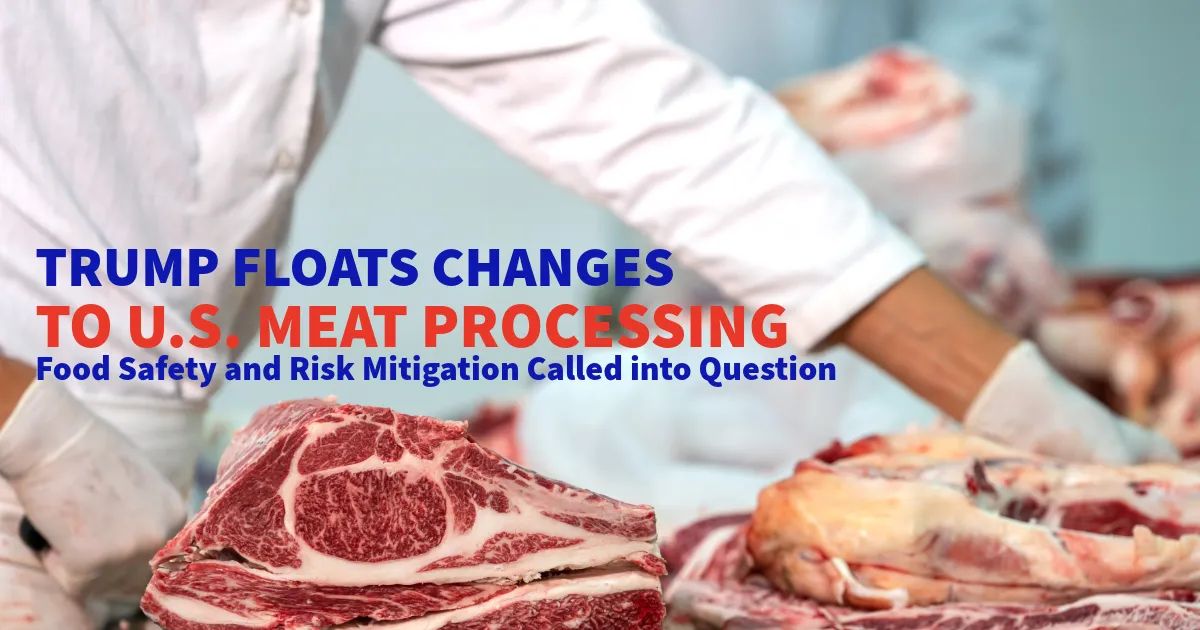
Trump Floats Changes to U.S. Meat Processing
August 28, 2026 – President Trump took to social media early Friday morning to announce the authorization of allowing farmers and ranchers to process their own food. In his post, Trump said, “Ranchers and Farmers have always been my number one priority for me. They work very hard, are smart, efficient, and immaculately CLEAN, but for years I have heard that they have a tremendous problem with the Big Processors, who many say are a nasty monopoly.”
He said there are four major packers and called that “a very non competitive (sic) number” and said they make “life miserable” for agriculture producers.
“So, in order to break this powerful monopoly, with much of its ownership based outside of the U.S., I am authorizing legal documents to be drawn in order to allow Farmers and Ranchers to be given the right to PROCESS THEIR OWN FOOD,” Trump wrote.
The Meat Institute issued a statement saying that America’s farmers and ranchers already have multiple pathways to process and market the livestock they raise that can be leveraged to achieve the goals stated by the President.
“Allowing uninspected meat to be sold to unwitting consumers is the wrong approach, and risks undermining this country’s reputation for producing the safest meat products in the world,” the statement read. “Today, producers may choose to process animals under a custom exemption, establish their own state or federally inspected facility to sell meat commercially, or work with one of the thousands of small and very small federally and state-inspected establishments. The Food Safety and Inspection Service provides extensive support to small and very small establishments through plain-language guidance, technical assistance, educational resources, and dedicated outreach programs designed to help plants meet regulatory requirements and produce safe food.”
The statement said the Meat Institute staff is waiting to see more details from the Administration. They said it is critical that expanding processing opportunities does not come at the expense of food safety.
“Federal and state inspection requirements exist for a reason: to help ensure that meat sold to American families is safe, wholesome and properly labeled. Allowing uninspected or inadequately inspected meat into the marketplace would put consumers at risk and undermine the food safety system that protects millions of Americans every day,” the statement read. “If the goal is to lower beef prices for American families, lowering food safety standards is the wrong response: America needs more cattle. Expanding the nation’s herd and increasing the beef supply will lower beef prices, preserve consumers’ and trading partners’ trust in the safety of the meat supply, and strengthen the entire beef supply chain, from producers to consumers. Jeopardizing food safety jeopardizes public health and the entire meat industry.
The statement assured consumers that the meat supply is safe thanks to the companies that prioritize food safety every single day, overlaid by USDA's inspection system. The Meat Institute will not waver in its efforts to continuously improve food safety and quality for Americans.
Kathryn Miller, a longtime meat processing expert, posted a response saying she saw social media comments cheering the announcement because “our grandfathers and great grandfathers didn’t need packinghouses.”
Miller said, “you know what they weren’t doing either? They weren’t having to sell into establishments that have a $10 million umbrella policy requirement for food safety.”
Miller said the risk mitigation system built into the food system has an insurance requirement that is cost prohibitive.
“Processing is not the problem,” she said. “Our retail and food service requirements for selling into commerce are a barrier to entry. It is that way because we live in a litigious society.”
She said she appreciates what the President’s intention is in spirit, but the functionality of his announcement is going to create a lawsuit for a rancher. She said the monopoly of the Big Four packers isn’t restricting access for producers, but rather an issue of risk mitigation. Retailers and food service suppliers, she said, aren’t going to allow uninspected meat through their channels “and no executive order is going to change that.”
The National Cattlemen’s Beef Association said they support creating more opportunities for small, mid-size and regional beef processors and eliminating unnecessary regulations that make it harder for those businesses to compete, but weakening federal meat inspection and food safety standards is not the answer.
“America’s cattle producers have spent generations earning consumer confidence in the safety and quality of U.S. beef,” the statement read. “That trust is invaluable, and so is the gold standard food safety system that helps sustain it. Neither should be jeopardized for a short-term political solution.”
In a statement, NCBA said “in just the past week, cattle producers have faced government intervention aimed at increasing foreign beef imports at prices below current levels. Now we are faced with another proposal aimed at changing how beef is processed. Constant government interference creates uncertainty for producers making long-term decisions about their businesses and the future of the cattle herd.”
NCBA said if Washington wants to help cattle producers, the focus should be on reducing legitimate regulatory burdens; lowering fuel and fertilizer costs; protecting the U.S. cattle herd from foreign animal disease; and expanding opportunities for small, mid-size and regional processors.
“American farmers and ranchers know how to produce safe, high-quality beef,” NCBA’s statement said. “Washington should stop trying to manage the cattle business and let the market work.”
.S. Secretary of Agriculture Brooke Rollins posted a social post of her own saying announcements would be released Monday in terms of waiving red tape in processing; expanding ranchers (sic) ability to sell across state lines; rescinding outdated guidance; adding technology for faster safety data; growing real support for small processors (funding and deregulation); fighting consolidation so small processors can compete; and expanding truth in labeling.
“The world is hungry for American beef,” Rollins said.
This post comes one week after Trump posted that he plans to open beef imports over the next 90 days without tariff.
That announcement prompted a joint letter from four major U.S. livestock organizations urging the President to reverse course on the proposed plan. American Farm Bureau Federation President Zippy Duvall, Livestock Marketing Association President Joe Goggins, National Cattlemen’s Beef Association President Gene Copenhaver and United States Cattlemen’s Association President Justin Tupper signed a joint letter expressing “deep concern” with the plan to import up to 300,000 metric tons of beef.
According to the letter, the stated purpose of the plan is to drive down beef prices, including selling imported product at prices that undercut domestic supplies. The livestock leaders argue that approach sends a discouraging message to U.S. farmers and ranchers.
The groups said they share the goal of keeping groceries affordable for American families but contend that increasing discounted foreign beef supplies is not a long-term solution.
“Flooding the market with discounted foreign beef is not the way to rebuild the American cattle herd, strengthen food security, or lower grocery bills in a lasting way,” the groups wrote.
The letter states that the announcement has already driven cattle markets sharply lower and comes at a critical time as producers market cattle and make decisions about rebuilding their herds.
The organizations also point to the higher costs producers have faced in recent years. They argue current beef prices reflect increased costs associated with raising cattle, grain and forage.
According to the letter, ranchers and farmers are beginning to experience the strong beef demand needed to reinvest in their operations following years of drought, high input costs, processing plant disruptions and other challenges that have reduced U.S. cattle numbers.
The groups warn that an influx of imported beef could discourage that investment and slow efforts to rebuild the U.S. cow herd.
They also frame the issue as one of long-term food security, arguing that using imports to address prices in the short term could have longer-term consequences for domestic beef production.
“We are deeply concerned that this import strategy sacrifices long-term food security for a short-term solution,” the organizations wrote.
The letter concludes by calling for fair and competitive cattle markets, honest price signals and policies that prioritize U.S. farmers, ranchers and consumers.
The four organization presidents urged the administration to reverse course on the 90-day import plan and instead work with the livestock industry on policies they say would keep food affordable while strengthening domestic production.
“We stand ready to work with you on policies that keep food affordable, protect producers and consumers, and preserve a viable future for the U.S. cattle industry,” the groups said.
Source: Western Ag Network


