Montana Rancher Takes Agriculture’s Voice to Capitol Hill
October 1, 2026
For Montana Farm Bureau Federation member Makae Reed, a recent trip to Washington, D.C., provided a firsthand look at how grassroots agricultural voices can reach policymakers on Capitol Hill.
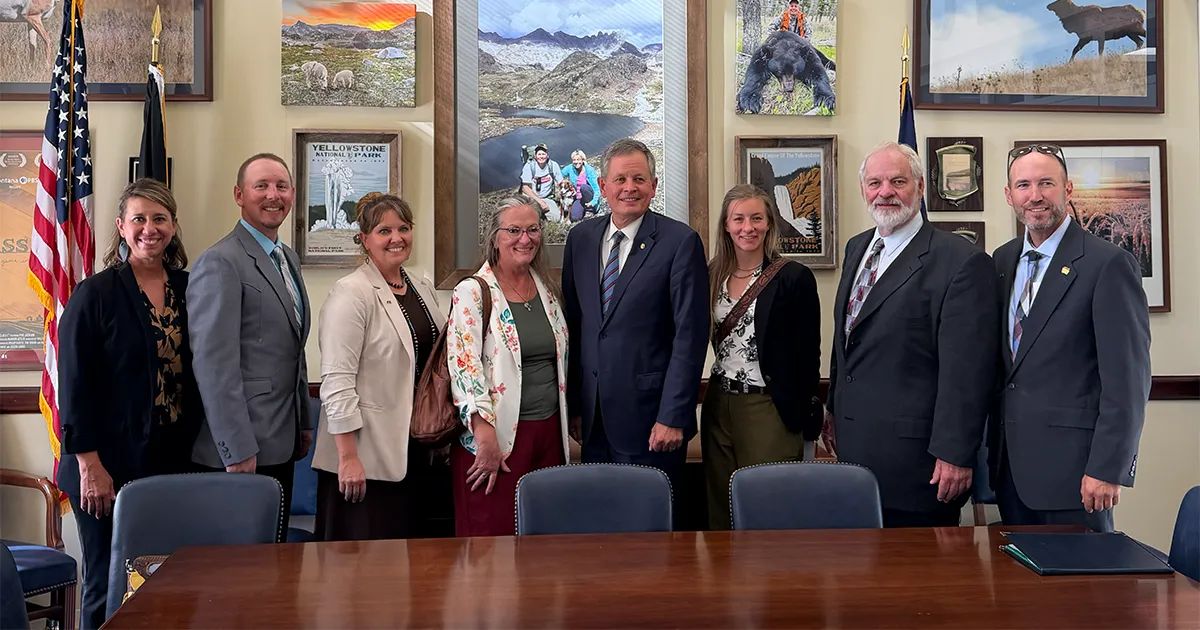
Reed, a sheep rancher from Whitehall who serves on Montana Farm Bureau’s Young Farmers & Ranchers Committee and chairs its Sheep & Goat Committee, joined other Farm Bureau members in Washington to discuss issues affecting farmers and ranchers. Montana Farm Bureau describes its D.C. fly-in as an opportunity for members to meet with Montana’s congressional delegation and federal officials while developing their advocacy skills.
For Reed, the timing of the trip added to the experience as work on the farm bill was underway.
“It was a really exciting time to be in Washington, D.C.,” Reed said. “Of course, the hot-ticket item was the Senate farm bill.”
Reed said the Montana delegation was in the Senate office buildings as the Senate Agriculture Committee moved its version of the farm bill forward.
“The Hill was very much alive,” she said.
Taking Montana Agriculture’s Voice to Capitol Hill
Beyond watching the legislative process unfold, Reed said one of her biggest takeaways was seeing how seriously Farm Bureau members are received when they bring firsthand agricultural experiences to Washington.
“Farm Bureau definitely carries a big weight,” Reed said. “When you bring that up, people sit down and they certainly listen.”
She said conversations with Montana’s elected officials included the farm bill as well as several issues important to producers back home.
Among the topics Reed highlighted were differences between House and Senate farm bill proposals, a potential federal response to California’s Proposition 12, agricultural input costs, cattle prices and labor policy.
For Reed, those discussions reinforced the role grassroots producers can play in the policy process.
‘It’s Who’s Showing Up’
As a younger producer, Reed admitted she was initially nervous about traveling to Washington and sitting across the table from policymakers and federal officials.
That feeling changed once the meetings began.
“I was a little nervous going into this, being a young producer, new producer,” Reed said. “But I don’t think that really matters a whole lot.”
Taking time away from the ranch—including missing a ram sale—to participate demonstrated a commitment that Reed said was recognized by those they met.
“People sat down and they listened to me,” she said.
Reed said being a younger agricultural producer may have even added value to those conversations because policymakers were able to hear directly from someone working to build a future in production agriculture.
“I think it was really exciting for them to see a young person come and voice their opinions and their support for what they’re doing—or, you know, how can we make things better?” Reed said. “It’s not who’s been in the industry longer. It’s who’s showing up.”
That grassroots participation is central to Montana Farm Bureau’s advocacy model. The organization says its policy process is designed to bring producer perspectives from the local level into state and national policy discussions.
Building the Next Generation of Ag Leaders
Reed also credits Montana Farm Bureau’s ACE leadership program with helping prepare her to become more involved in agricultural advocacy.
ACE stands for Advocate, Communicate and Educate, three skills Reed believes are increasingly important for farmers and ranchers who want their voices heard.
“ACE is a phenomenal leadership program,” Reed said. “The speakers that they bring in just light a fire in your stomach and really drive you to want to be better, to want to lead, to step up and be the change you want to see.”
Reed called it one of the best leadership programs she has participated in.
Her experience in Washington, she said, showed that producers don’t have to be longtime policy experts to participate in the process. Sometimes, what matters most is simply being willing to leave the farm or ranch, make the trip and tell agriculture’s story directly.
Source: Western Ag Network


