Colorado Cattlemen's Association Returns Home to the Exchange Building
DENVER, CO., January 9, 2026 – The Colorado Cattlemen’s Association has returned to its original home in the newly renovated Exchange Building.
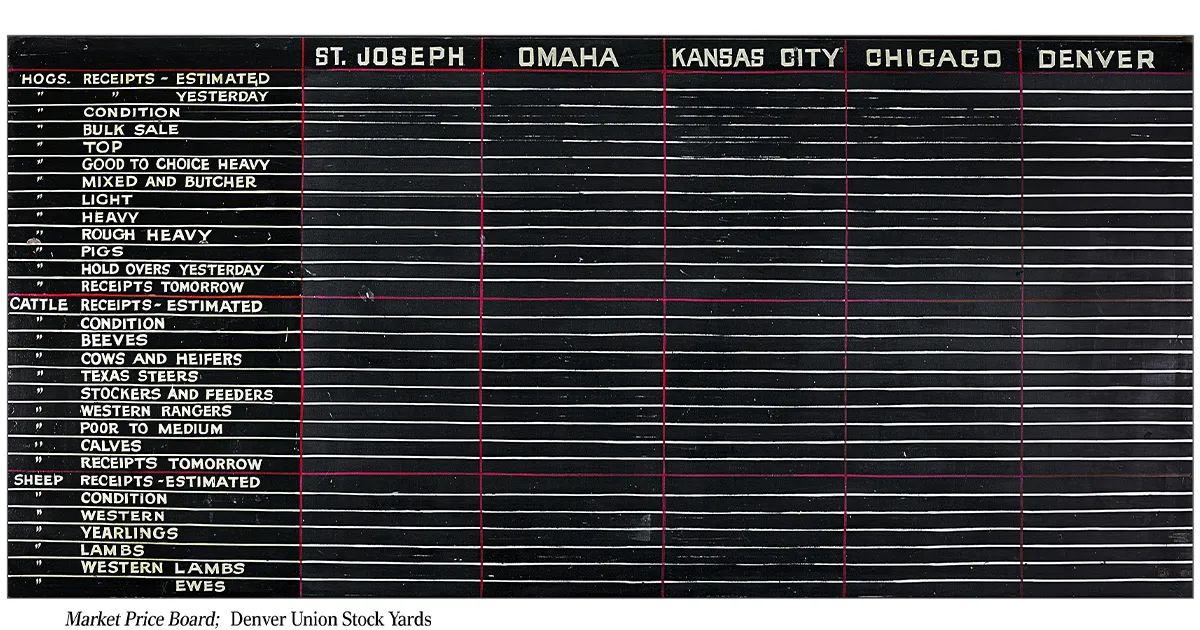
The CCA predates the state of Colorado and seven of its members changed the history of the cattle industry when in 1881 they founded the Denver Union Stock Yard Company. The first cattle arrived in the Stock Yards in 1886 by rail via one of the three rail lines that ran through the Yards. By 1905, the Denver Union Stock Yards were selling 239,000 head of cattle, 115,000 head of hogs, 306,000 lambs, and 22,000 horses annually. In 1908, the Denver Union Stockyards Company sold $2.8 million of livestock, according to a 1909 edition of the Denver Municipal Facts. That year, the daily yard capacity was 30,000 cattle, 30,000 sheep, 20,000 hogs, and 2,000 horses and mules. Fat cattle sold for an average of $40 per head; calves $8; sheep $4; hogs $10; and horses and mules $30. The total number of fat cattle sold that year was 395,164 head. It established Denver as a major hub and a town built on the shoulders of the cattle business.
The Exchange Building was built in 1898 and was home to the Denver Union Stock Yard Company, the Record Stockman newspaper, 14 commission firms, a café, the Stockyards National Bank. The Colorado State Farm Bureau, and the local office of the U.S. Bureau of Agricultural Economics. According to the Denver Municipal Facts publication, three large packing houses and a dozen smaller processors were all adjacent to the stockyards. The Santa Fe, Burlington, Rock Island, Colorado and Southern, Colorado Midland, Denver and Rio Grande, Union Pacific, and Moffat railroads all had connections in the stockyards, carrying livestock in and out of the stockyards, hauling in a total of 19,047 loaded cars of stock.
When CCA president Elias Emmons proposed hosting an annual stock show, a committee was formed that included members of the Denver Union Stock Yards company and the Colorado Cattle and Horse Growers Association (now CCA). What is now the National Western Stock Show first took place in 1906.
In 1906, the Western Stock Show took place in Floto Shows Company’s largest tent, located up the hill from the newly constructed Exchange Building. Thomas Cross judged the individual fat cattle, selecting a 2-year-old red Shorthorn shown by Colorado A&M. The champion steer sold to Denver butcher J.D. Miller for 33 cents per pound. The champion carload of fat steers was purchased by United Packing Company for 10 cents per pound. Until the 1970s, fat cattle were shown by breed and age and the grand champion was selected from the breed champions.
Students from Colorado A&M in Fort Collins arrived by train and spent the day, as reported in the Record Stockman, “practicing judging and practical-look studying (of) the animals.” The Stockman reported on the huge crowd, including how “broad white sombreros crown the heads of the men from the staked plains of Texas, and the natty derby the craniums of Omaha, Chicago and Kansas City commission men, while one or two of the eastern beef barons appeared with a silk hat.”
When the Stock Yards ceased operations, the Exchange Building housed private office spaces and sat mostly quiet save for the 16 days of the National Western when the pens around the building were bustling.
CCA began the process of purchasing the Exchange Building in 2011 and officially occupied their office space in what has been called “the building that built Denver” on Jan. 8, 2026. CCA will host an open house on Jan. 9 from 1-3 p.m., RSVP required; and a CCA Headquarters Preview on Jan. 11 from 9-11 a.m., RSVP required to 303-431-6422.
Source: The Fence Post Magazine, Rachel Gabel


