
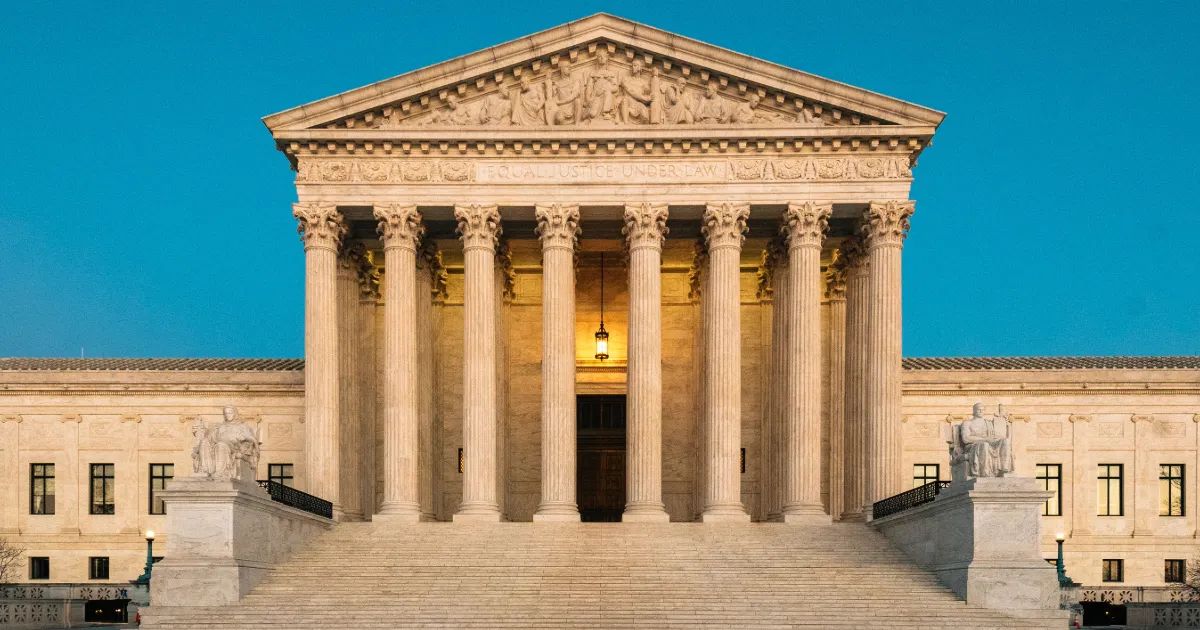
Supreme Court Blocks Trump Emergency Tariffs
February 20, 2026
The U.S. Supreme Court on Friday struck down President Donald Trump’s sweeping tariffs imposed under a national emergency law, ruling in a 6–3 decision that the president exceeded his authority.
According to Reuters, Chief Justice John Roberts wrote that the International Emergency Economic Powers Act (IEEPA) does not give a president the power to impose tariffs, even though it allows regulation of imports during emergencies. The court upheld lower court rulings that found Trump acted unlawfully.
“Our task today is to decide only whether the power to regulate importation embraces the power to impose tariffs. It does not,” Roberts wrote.
The decision reinforces that the U.S. Constitution grants Congress — not the president — authority over taxes and tariffs. The majority said allowing tariffs under IEEPA would intrude on congressional powers and violate the “major questions” doctrine, which requires clear authorization from Congress for actions with major economic impact.
Justice Brett Kavanaugh, joined by Justices Clarence Thomas and Samuel Alito, dissented, arguing tariffs are a traditional tool to regulate imports and suggesting the ruling may not significantly limit future presidential trade actions under other laws.
Reuters reported the ruling immediately moved financial markets, with U.S. stocks rising and the dollar weakening as uncertainty around Trump’s tariff policies shifted.
Trump had relied heavily on tariffs as an economic and foreign policy strategy, using them in global trade disputes and negotiations with major partners including China, Canada and Mexico. Economists estimated more than $175 billion had been collected through tariffs imposed under IEEPA, raising questions about potential refunds.
Administration officials have indicated they may pursue new tariffs through alternative legal authorities, while business groups warned the decision could create additional uncertainty for trade and agriculture markets.
The case was brought by businesses and a coalition of states challenging Trump’s unprecedented use of emergency powers to impose import taxes without congressional approval.


