Montana Congressional Delegation Pushes for Funding to Repair St. Mary Canal
April 29, 2026
Montana’s congressional delegation is calling on federal officials to prioritize funding for critical irrigation infrastructure in northern Montana.
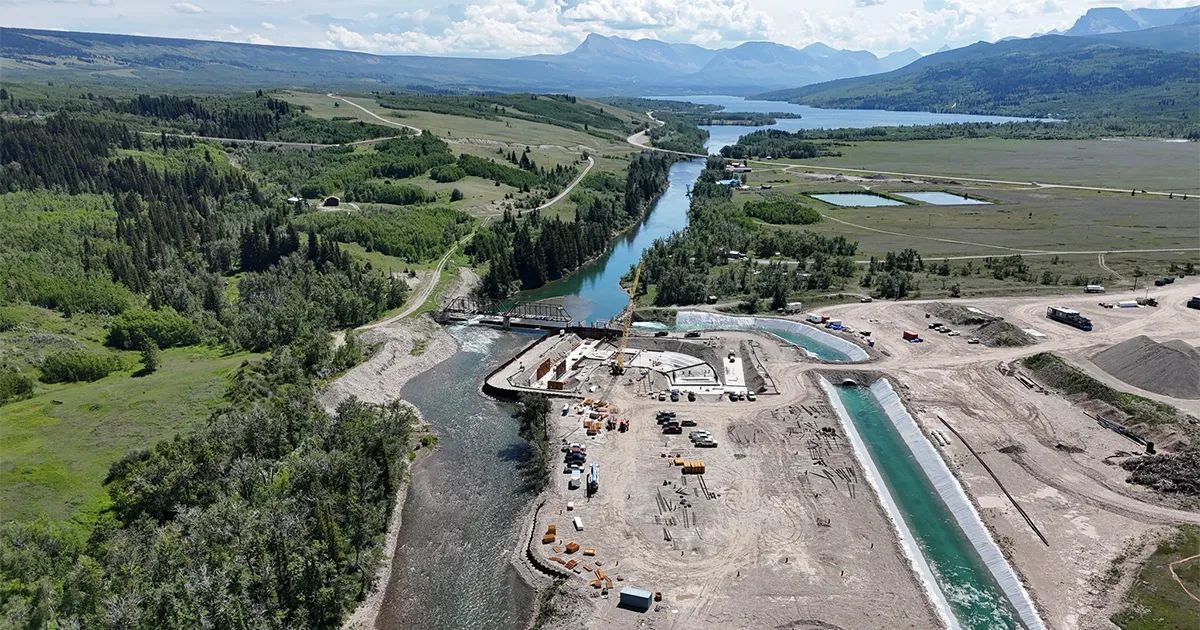
U.S. Senators Steve Daines and Tim Sheehy, along with Congressmen Ryan Zinke and Troy Downing, have sent a letter to the U.S. Bureau of Reclamation urging support for repairs to the St. Mary Diversion Dam and Canal—part of the Milk River Project.
Jennifer Patrick, Milk River Joint Board of Control Project Manager in Havre says, they’re very grateful for the support.
"A big thank you to our congressional delegation," said Patrick. "Some things people kind of forget is we have taken a diversion dam, which is a large project, the siphons, two of the five drops, but there still is 29 miles of 100 year old infrastructure canal, system that that needs to be rehabilitated. And that right now is is about $300 million. So, the letter was was great. There is some extra funding maybe available that we could be in the running for or possibly be able to get."
She says she says the water is flowing which makes for a lot of happy farmers, ranchers and municipalities along Montana’s Hi-Line who depend on the Milk River for their water.
"There's a lot of a lot of smiles up and down the basin right now," said Patrick. "We're still we're still in a water shortage. They did come out with about 1.4 acre feet is the allotment, which normally it's over to, just we don't have we need enough time to get those reservoirs back, back up and filled up. But, a big sigh of relief for sure. And Mother Nature could help us out any time right now too."
In the letter, the lawmakers stressed the importance of ensuring the project qualifies for funding under the “Water Conveyance and Surface Water Storage Enhancement” provisions in the recently passed legislation.
“We write to urge full and fair consideration of the St. Mary Diversion Dam and Canal of the Milk River Project (Project) in northwestern Montana to be an authorized recipient of funding,” they stated.
Originally constructed in 1915, the canal was designed to divert up to 850 cubic feet per second. However, aging infrastructure has reduced that capacity to roughly 600 cfs—resulting in significant water losses as flows move across the border into Canada.
Lawmakers warned the system is increasingly fragile. While two of the canal’s five drop structures have been replaced, the remaining three are at risk of failure. A previous failure in 2020, followed by a siphon collapse in 2025, led to a complete loss of irrigation water for the season—costing producers hundreds of millions of dollars.
“The failure of any three remaining Drops could once again lead to catastrophic failure and severe economic loss,” the delegation wrote.
They emphasized that the federal funding program is specifically intended to restore and enhance aging water delivery systems like the St. Mary Canal.
With the region heavily dependent on the Milk River Project for irrigation, the delegation says repairing the system is critical to protecting water resources and ensuring the long-term viability of agriculture in north-central Montana.
Source: Montana Congressional Delegation/Western Ag Network


