.png?fit=outside&w=1200&h=630)
JBS Workers Form Picket Lines in Colorado
March 16, 2026
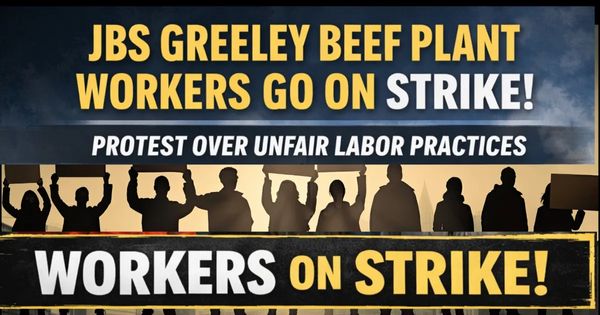
A strike is now underway at the JBS beef packing plant in Greeley, Colorado—raising concerns across the cattle complex and the broader beef supply chain.
Union workers formed picket lines in the early morning hours of March 16 after negotiations between the company and United Food and Commercial Workers Local 7 failed to produce a new labor agreement.
The facility employs roughly 4,000 workers represented by the union.
Workers voted overwhelmingly in February—by 99 percent—to authorize what union leaders call an unfair labor practice strike. They cite concerns over wages, rising health care costs and what they describe as the company’s refusal to negotiate fairly.
UFCW Local 7 President Kim Cordova says the union is seeking wage increases that keep pace with Colorado’s rising cost of living and protections against increasing health care expenses.
“For months now, JBS has been insisting on poverty-level wages for workers at the plant,” Cordova said in a statement, adding the company’s proposed wage increases would fall short of keeping up with inflation.
The current labor contract expired last July, and negotiations have continued for several months. JBS says it has been negotiating with the union for eight months and believes its proposal is fair, noting it aligns with a national agreement reached with the union in 2025 that includes higher wages and pension benefits.
Market analysts say the strike adds uncertainty to cattle markets. Packers are already operating with relatively tight margins and limited throughput, and any disruption at the Greeley facility could further tighten processing capacity.
JBS has indicated it would shift production to other facilities while the strike continues.
Analysts say the situation could add volatility to cattle markets and raise concerns about potential impacts on beef supplies until the labor dispute is resolved.


