
Baling Out Farmers from the Sawfly Menace
February 17, 2026
ARS researchers discovered a new biocontrol technique to reduce one of the biggest pests to wheat growers. Wheat stem sawfly (Cephus cinctus) costs wheat growers an estimated $350 million annually. Due to the limited options for controlling this pest, its range has expanded over the past years, causing devastation to dryland winter wheat crops grown in Colorado and Nebraska. ARS researchers in Fort Collins, CO, and Sidney, MT, along with university colleagues, have developed and tested a simple yet efficient method to control sawflies in affected areas.
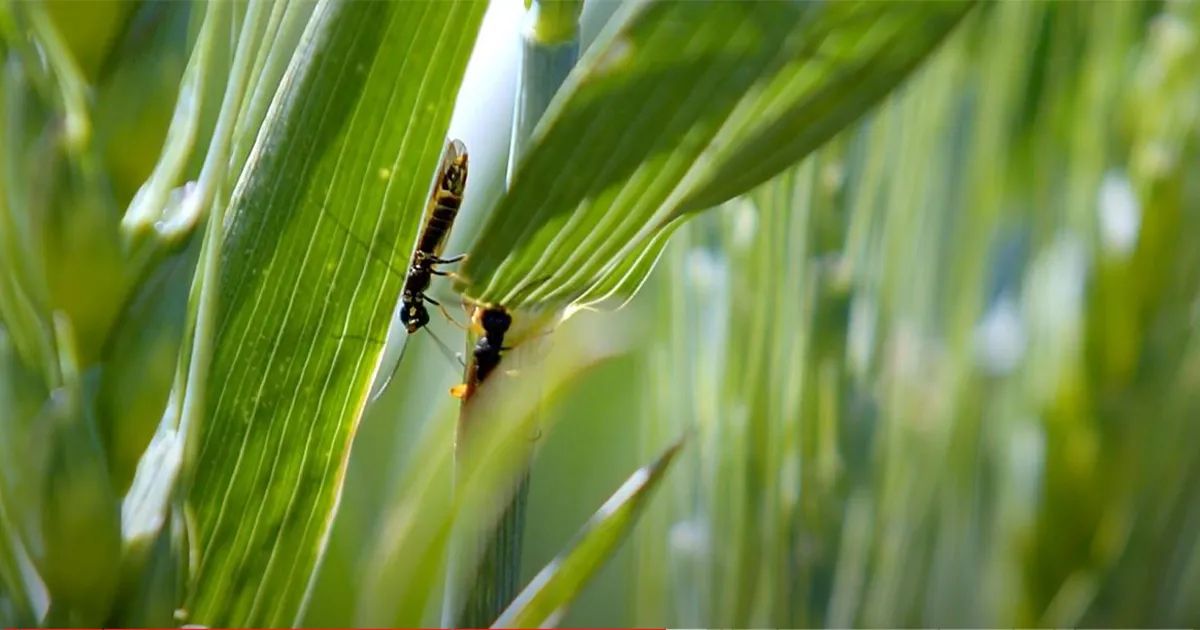
Scientists used bales of wheat straw to transport a native predator of sawflies, day-glow orange parasitoids (Bracon spp.), from areas where they were established to devastated wheat-growing regions in Colorado and Nebraska. These parasitoids specifically prey on the wheat stem sawfly. Collaborating with the USDA’s Animal Plant Health Inspection Service, the team moved nine straw bales to the ARS field station, where roughly 67,500 parasitoids emerged. The parasitoids promptly went to work, killing sawflies in the wheat fields where they were introduced. This technique for biocontrol has great potential to significantly increase wheat yields in heavily infested areas of the Great Plains.
The Agricultural Research Service is the U.S. Department of Agriculture's chief scientific in-house research agency. Daily, ARS focuses on solutions to agricultural problems affecting America. Each dollar invested in agricultural research results in $20 of economic impact.
Source: USDA


