
New Mexico's Line Fire Burns 30,000 Acres
June 10, 2026
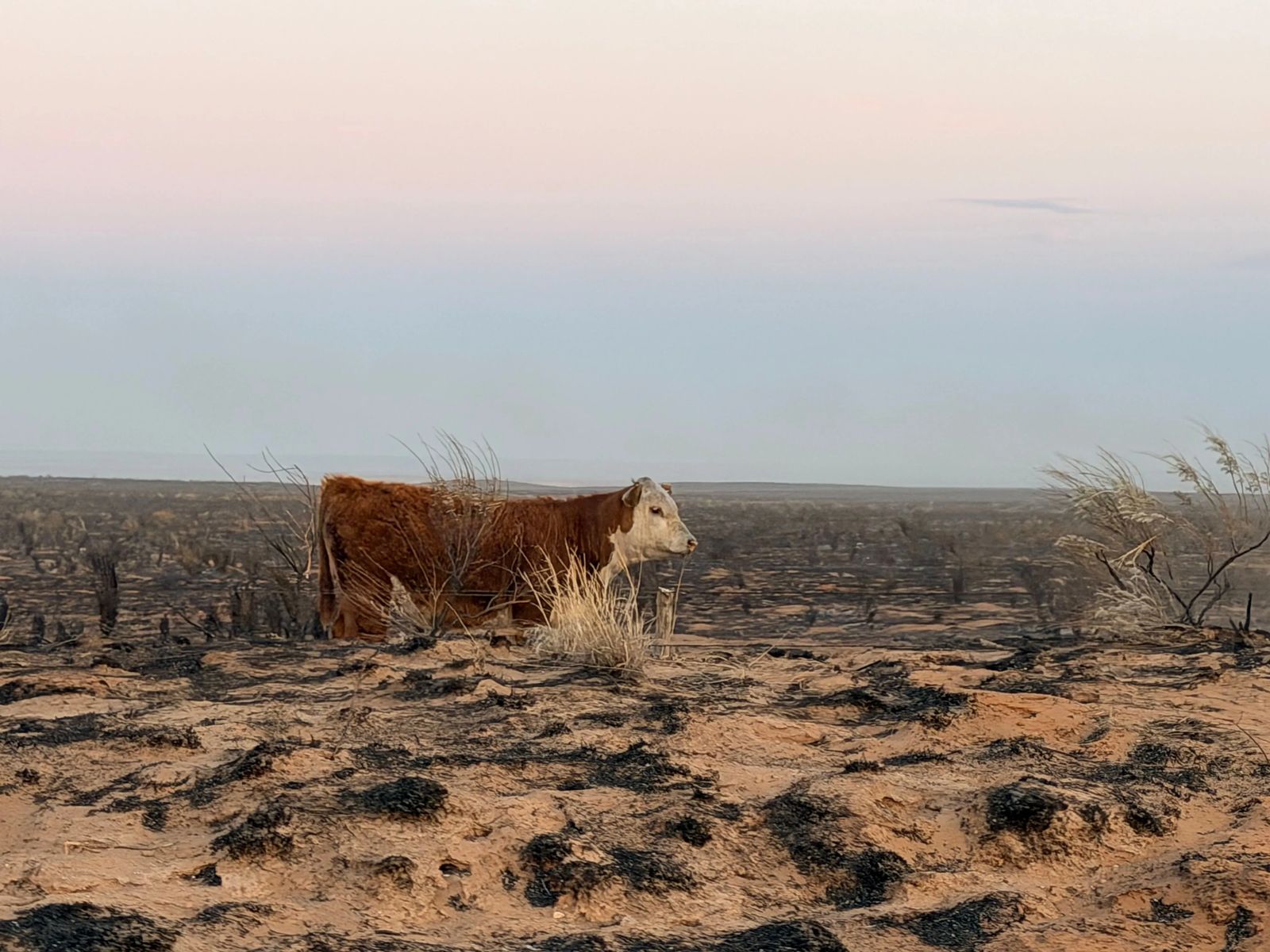
Ranchers in the panhandle of Texas and eastern N.M. had plentiful rains last year which resulted in more grass than usual. Now, as much of the country is experiencing a dry winter and spring, the ample fuel, dry conditions, and ferocious winds combined to burn over 30,000 acres on May 14. Kyle and Tonya (Orr) Perez ranch near Nara Visa, N.M. and lost a tremendous amount of pasture and fences in the Line Fire just days before fires burned in southeastern Colorado near Campo.
“We had a really good summer last year,” Perez said. “More than ample rain. I mean, really, we had green grass through the end of April, all the way into the fall. And grew a lot of old grass. You know, you try to take care of your land. We dry graze all year long and supplement with dry grazing so we leave stockpile grass to make it to the next spring.”
As was the case across much of the West, the winter was dry and then the spring was dry. The wind, too, was fierce. Perez was AIing a group of Angus cows, and he had three left to breed when he smelled the smoke on May 14. He said there was one cloud that “didn’t have a bucket of water in it” but it did have lightning. No stranger to fires, the ranch had fire rigs at the ready and Kyle and his dad, Michael, were trying to move cattle out of the way and knock down the flames. It became apparent quickly, though, that more help was needed.
The Nara Visa Fire Department was quick to respond and backup departments were, too, but the closest is about 40 minutes away from the fire plus the time it takes for volunteers to arrive to their department to begin the trip.
The set of cows that Perez spent the day breeding were in a pasture that the fire crossed twice. Another set of Hereford cows were scheduled to receive fresh embryos the following morning and their pasture also burned. It was then that Tonya took a video of the Hereford cows trotting out of the ash, the flames behind them, moving toward the feed truck and bawling at the siren they use to call cows to feed. This time, it was wailing them to safety.
“By the time I got there, Michael was actually in that pasture, came on the backside, trying to cut the fire off and keep it from blowing or going through that pasture and he actually got stuck down in there, and he couldn’t get the cows out so they kind of saved themselves,” she said. “When I got there, Michael was stuck, and Kyle was on the fire truck, and I watched the fire blow over those cows and then it came back as the wind shifted. It’s a helpless feeling.”
That group of cows took the brunt of the fire, Perez said, though they were lucky enough to have no cattle losses, due in part to the large pasture sizes. Their neighbors, though, lost cattle during the blaze and in the days that followed.
“Some of our neighbors had cattle that died and a lot of others that had to be put down,” he said. “I mean, these cows, some of them were a little sore on their hind feet and they could tell some of them were singed, the hair was singed to a degree but not to the skin. Some of their bags were sore and kind of chapped or blistered, but from our standpoint, in our cattle nothing was going to die.”
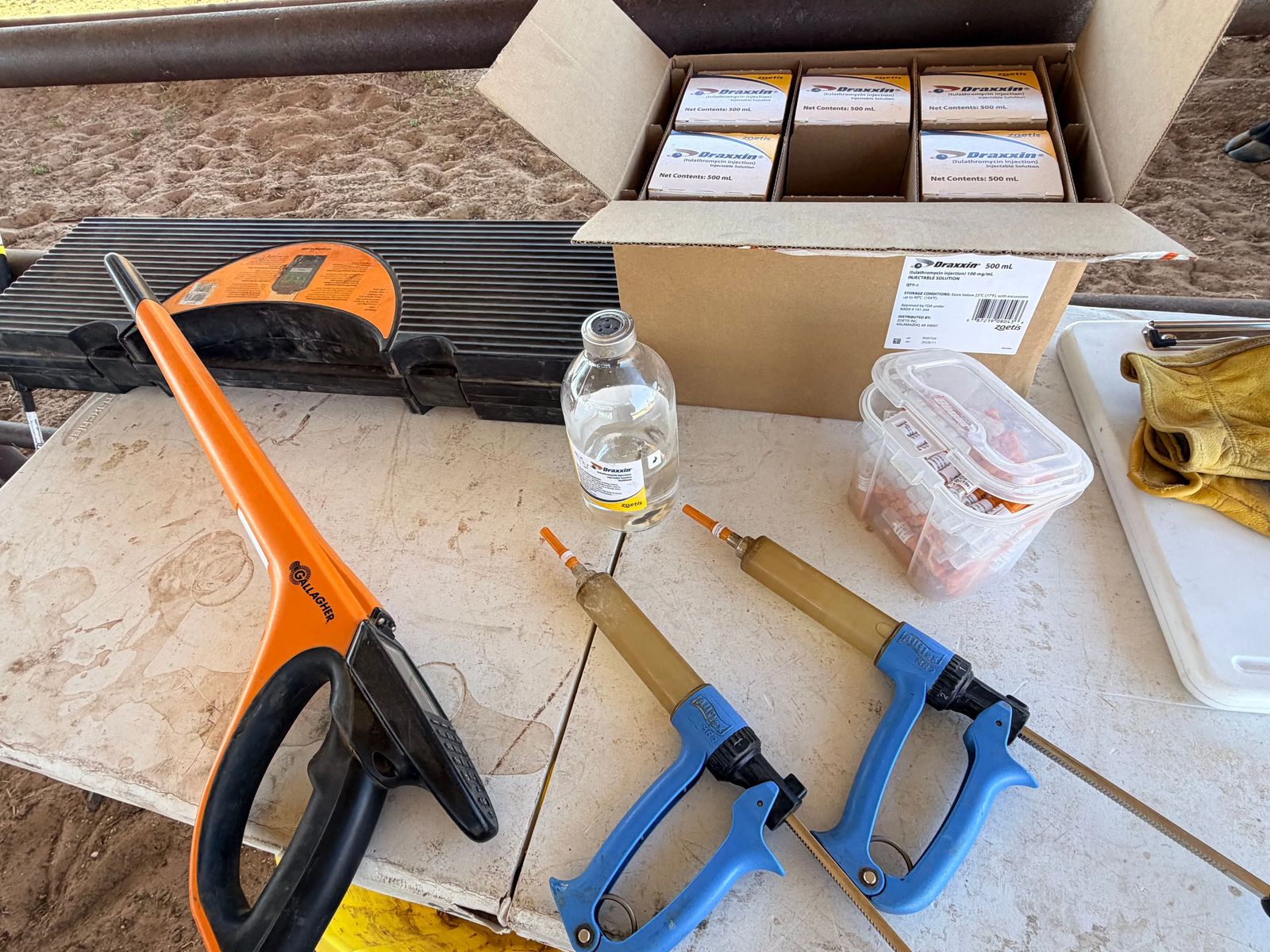
The local veterinarian wasn’t far from the Perez outfit that day and Perez said he worked quickly with Zoetis to deliver cases of Draxxin to the ranchers affected, allowing the producers to mass treat the cattle for respiratory distress.
“We had to give them a rough head count to what we had and they showed up before we could actually get the cattle and before the fire was completely out,” he said. “Our vet at Twist Junction there in Dalhart organized it and I think they brought the drugs from Hereford. He was actually out preg checking for some other places and by the end of the day, we had it.”
The rebuilding of fences is not moving at the same speed, nor is any government assistance. Tonya, who was among the first to begin building websites for ranches and designing sale catalogs, is using her technology savvy to aid that process. She has been utilizing OnX to map pastures and fencelines to estimate the miles of fences lost and the acres of grass burned.
“You just basically draw it,” she said. “I created a folder for each pasture and then I did the perimeter fence and then all these are cross-fenced so then I did the cross-sections. Then some pastures have four traps so then I can narrow it down to each pasture, how many acres are in there and then I can get an estimate. We couldn’t drive all the fencelines we lost in three days so this is an easy way to get an estimate.”
They lost close to 30 miles of fence and about 10,000 acres of pasture.
“A lot of grass got burned,” Kyle said. “A lot of country, a lot of grass. A lot of fencelines. It basically burned to the irrigation circles and the blacktop.”
In the weeks after the fire, Kyle decided to put bulls back on the group of cows scheduled to get embryos.
“Yesterday and today, we’ve caught some rain on the burned area and even on this other ranch but it’s the drought or D3 status was present when we were having to make these decisions. So if you’ve got to reduce some numbers or sell some cattle, my thought process was that once we weaned the embryo calves off of them, they would be a valuable animal to be sold to somebody else and it might be best if they weren’t carrying an embryo calf. So right or wrong, that’s what we decided.”
He said another transfer date would have been another 14 days, putting the breed date into mid June. Not knowing if any rain would come but knowing it would most likely become hotter, he turned bulls out and hoped that any rains would be measurable enough to improve pasture conditions. They’ve already had several inches of rain but he said it will take time to regrow pastures and the cattle will have to be fenced off the most fragile areas.
“It’ll take a couple of years to get the turf back to where it once was,” he said. “I mean, it does need some grazing on it just so you can keep up with the weeds and the trash, but you sure don’t want to stomp it out, too. We’re going to fight the sand, too, because it’s such a massive area. The sand is already moving.”
He said the blowing sand isn’t nearly the erosion being faced in the Sandhills of Nebraska, due to the yucca and sage present to anchor it.
On May 28 the Perez family attended a meeting with government officials and Tonya said the county-level leaders are on board to help the recovery efforts. New Mexico Governor Michelle Lujan has not approved a disaster declaration, though it was presented to her for approval prior to May 26. The fire also burned into Texas, so Tonya said there are many moving parts to securing aid. Thus far, they estimate 55 to 60 corners will need to be replaced, with no aid immediately available, making the fire the easiest part so far.
The ranch is also in the path of the proposed NIETC line and Tonya Perez said the limited firefighting resources are only one of the reasons in a long list that the area is inappropriate for the project.
Source: Rachel Gabel. Western Ag Network