Colorado Potato Grower Sees Innovation and Resilience Key to Future
July 23, 2026
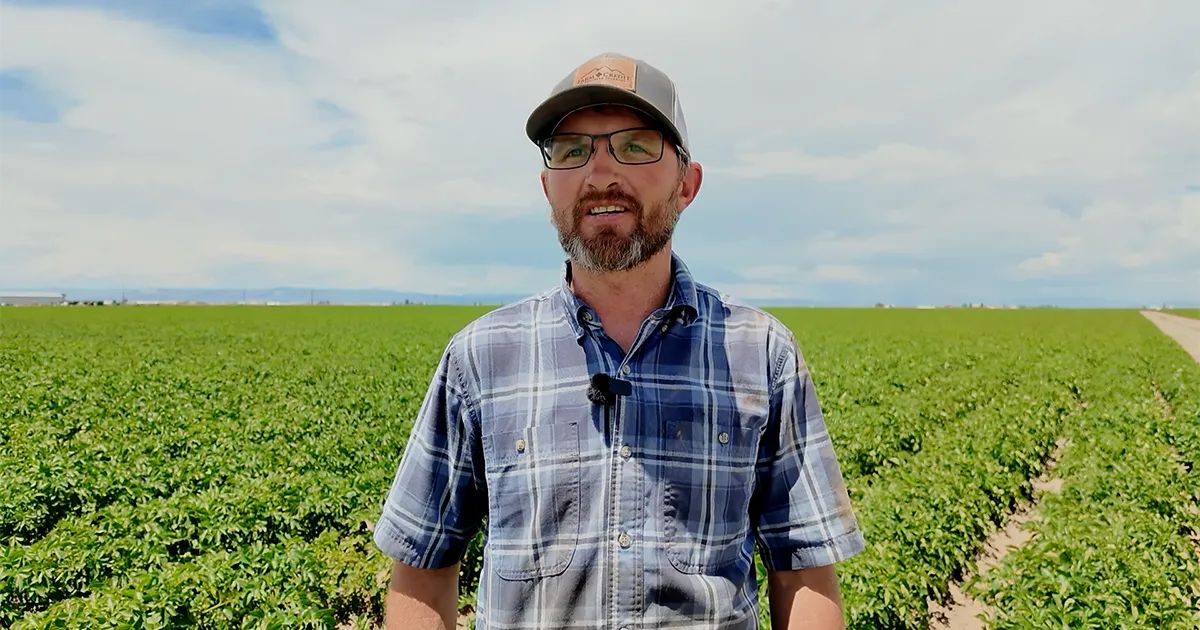
Potatoes have been the foundation of the Mitchell family farm in Colorado's San Luis Valley for more than 80 years. Today, third-generation producer Tyler Mitchell says the family continues to adapt to changing conditions while remaining committed to growing one of America's favorite foods.
Mitchell, owner of Mike Mitchell Farms LLC near Monte Vista, traces his family's roots in the valley back to the late 1930s when his grandfather and great-uncle moved to the region and eventually purchased farmland.
"My grandpa and his brother moved here to the valley in the late '30s," Mitchell said. "They started growing potatoes pretty much from day one, and that's been our family's focus ever since."
Today the operation concentrates on russet potatoes, the crop that has become synonymous with the San Luis Valley.
Why the San Luis Valley Excels
Mitchell says the region's unique climate makes it one of the premier potato-growing areas in the country.
"We're at about 7,600 feet in elevation," he explained. "The warm days, cool nights, and low disease pressure make it an ideal place to grow potatoes."
Stretching roughly 70 miles wide and 130 miles long, the San Luis Valley is a high-altitude desert where groundwater irrigation allows growers to carefully manage moisture throughout the growing season.
"We don't receive a lot of rainfall," Mitchell said. "Because we're irrigating with groundwater, we can control when and how much water the crop receives."
Adapting to a New Reality
While potatoes remain the operation's primary crop, prolonged drought has forced Mitchell and many neighboring growers to rethink traditional crop rotations.
Historically, the farm rotated potatoes with malt barley. Today, Mitchell has incorporated crops requiring less water, including quinoa and winter rye.
"We've changed our rotation quite a bit," he said. "We grow winter rye and bring in cattle from neighbors to graze it. That gives us nitrogen back into the soil while using significantly less water."
The integrated system has helped reduce irrigation needs while maintaining soil health.
Water Remains the Biggest Challenge
Despite those changes, Mitchell says water continues to be the greatest concern facing producers across the valley.
"We've been dealing with historic drought since 2002," he said. "Learning to adapt to what could be the new normal has been one of the biggest challenges."
As groundwater levels decline, growers are forced to produce quality crops using fewer irrigation resources.
"You start seeing it in your wells," Mitchell said. "Managing that limited water supply while still producing a quality crop is probably our biggest challenge."
Weak Markets Add Financial Pressure
In addition to drought, potato producers are facing difficult market conditions following last year's large national crop.
"The bumper crop across the country really hurt the potato market," Mitchell said. "When potatoes are your bread and butter, that creates a real financial strain."
Many growers are responding by reducing planted acreage in hopes of bringing supply back into balance with demand.
"We're trying to cut back production so we're not flooding the market," he said. "Hopefully that allows prices to recover and helps keep growers in business."
Mitchell says recent disaster and market assistance announced by the Trump Administration has provided much-needed financial relief for specialty crop growers.
"When something like this happens unexpectedly, a lot of us end up carrying a lot of debt," he said. "Having that economic relief really helps."
He also credited the National Potato Council for advocating on behalf of growers in Washington.
Telling Agriculture's Story
Despite the challenges, Mitchell remains optimistic about the future of potato farming.
"I don't think there's another vegetable I'd rather grow," he said. "Everybody loves potatoes. They're delicious, versatile, and there are a million ways to cook them."
He believes producers must continue building stronger relationships with consumers.
"We're real people doing our best to grow a safe, high-quality crop," Mitchell said. "We eat these potatoes every day ourselves, and we want consumers to understand the care that goes into producing them."
The Importance of Industry Representation
As chairman of Colorado Potatoes, Mitchell says organizations like the National Potato Council play an essential role in ensuring growers have a voice in public policy.
"My profession is farming," he said. "During the growing season, that's what consumes all of our time."
Because producers cannot regularly travel to Washington, D.C., or state capitols, Mitchell says industry organizations are critical.
"Having groups like the National Potato Council out there fighting for us and keeping us informed about what's coming down the pipeline is extremely important," he said.
For Mitchell, that advocacy, combined with continued innovation on the farm, will help ensure the San Luis Valley remains one of the nation's premier potato-producing regions for generations to come.
Source: Western Ag Network


