
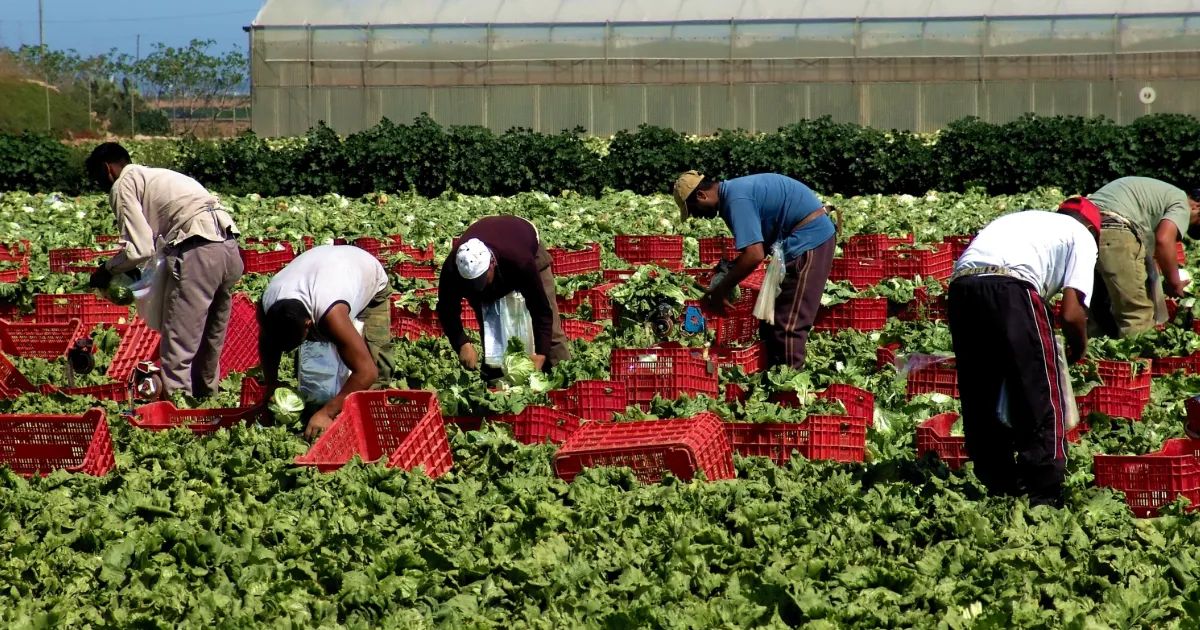
Bipartisan Bill Seeks First Major H-2A Reform in Four Decades
June 30, 2026
U.S. Representative Glenn "GT" Thompson (R-Pa.) has introduced the bipartisan Securing Agriculture's Workforce Act of 2026 (H.R. 9535), legislation aimed at modernizing the H-2A agricultural guest worker program for the first time in 40 years.
"It's time to bring the H-2A program into the 21st century," Thompson said. "Producers have been sounding the alarm for years that Congress needs to address the workforce crisis we have on our hands in farm country. The H-2A visa program is woefully outdated, and it no longer meets the needs of American agricultural production."
The H-2A program, established through the Immigration Reform and Control Act of 1986, allows non-immigrant foreign workers to perform temporary agricultural jobs when domestic workers are unavailable. Thompson's legislation would expand access to the program for year-round agricultural operations, provide cost controls for employers, and streamline the federal agencies responsible for administering the program.
"There is no greater national security threat than disruptions to our food supply," Thompson said. "The Securing Agriculture's Workforce Act of 2026 makes the practical, commonsense reforms required to prevent these disruptions by providing a workforce that meets agriculture's needs—now and in the future."
The legislation has earned support from more than 400 agricultural organizations.
Mike Wenkel, Chief Operating Officer of the National Potato Council, said the proposal addresses longstanding concerns with the existing guest worker system.
"The current guest worker program that we have for agriculture was enacted in 1986, and there really haven't been any significant changes to that legislation in 40 years," Wenkel said. "It really focuses on three key areas of trying to modernize the program by expanding access, controlling costs at the farm level, and streamlining the process for bringing people into the U.S. on a temporary basis to work in agriculture."
According to Thompson's office, more than 300,000 H-2A visas were issued in 2024, representing a 2,766 percent increase compared to 1996. The bill also seeks to address rising labor costs, noting that increases in the Adverse Effect Wage Rate (AEWR) from 2010 through 2025 outpaced inflation by 70 percent.
Montana Stockgrowers Support Reforms
The Montana Stockgrowers Association recently voiced its support for the House Agriculture Committee's efforts to modernize the H-2A program.
In a June 26 letter to Chairman Thompson and Ranking Member Angie Craig, the association praised provisions designed to improve the functionality of the program and urged lawmakers to ensure livestock auction markets and rancher- or farmer-operated feeder feedlots are explicitly recognized as qualifying agricultural employers under H-2A.
MSGA President Lesley Robinson wrote that livestock auction markets are a critical part of the agricultural supply chain and serve as a direct extension of ranch and farm operations.
The organization noted that sale barns in one Montana market region facilitated more than $554 million in livestock sales during 2025, including approximately 220,000 cattle, 6,485 horses, and 67,000 sheep and goats. Nationally, roughly 1,000 livestock auction markets handle millions of head annually and support an estimated $30 billion in agricultural commerce.
The association also said rancher- and farmer-operated feeder feedlots perform essential livestock production functions but have often faced uncertainty under current H-2A interpretations. MSGA argued clarifying eligibility would improve regulatory certainty, address workforce shortages, enhance animal and worker safety, and help maintain efficient livestock marketing channels.


