
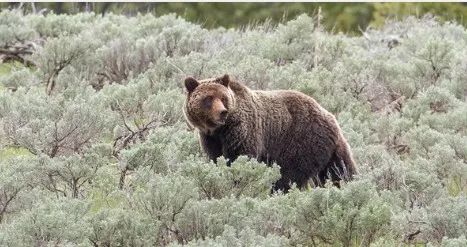
Trump Administration Returns Management of Grizzly Bears to the West
July 14, 2026
Today, the Department of the Interior announced a revised proposal to increase management flexibility for grizzly bears in areas where the species has met, and in many cases exceeded, federal recovery benchmarks. The updated management proposal ensures the Endangered Species Act is being used as Congress intended while continuing to support the species' long-term conservation. Secretary of the Interior Doug Burgum was joined by Montana Governor Greg Gianforte, Wyoming Governor Mark Gordon, Idaho Governor Brad Little and Fish and Wildlife Director Brian Nesvik for the announcement.
The revised proposal builds on decades of conservation progress led by states, tribes, federal agencies, private landowners and local communities. By providing additional management flexibility in areas where conservation benchmarks and population objectives have been achieved, the proposal would help wildlife managers address conflicts and public safety concerns while continuing to support the long-term conservation of grizzly bears.
“The science is more than clear: grizzly bears have recovered and far exceeded every federal recovery benchmarks. Today, Interior is returning conservation leadership to the Western states instead of Washington bureaucrats,” said Secretary of the Interior Doug Burgum. “Under the leadership of President Trump, we’re following the science, upholding the law and ending politics masquerading as conservation.”
“Thanks to the work of Montana Fish, Wildlife, and Parks, the U.S. Fish and Wildlife Service, and many Montanans over decades, the grizzly bear recovery story is one of America's great conservation successes,” said Governor Greg Gianforte. “With this success has come a challenge – bears have expanded into new areas and conflicts have increased with farmers, ranchers, recreationists, and residents. Returning management to the states is a welcome change and Montana is ready to lead to balance conservation and the safety of our communities.”
“It’s long past time to delist the grizzly bear,” said Senator Steve Daines. “I commend Secretary Burgum and his team for recognizing this and taking a good first step in the process by expanding state management of the grizzly.”
“Today’s proposed rule marks an important step towards returning management of grizzly populations to the state level where it belongs,” said Senator Tim Sheehy. “I look forward to working with the Trump Administration going forward to delist the grizzly bear and support the needs of local communities.”
"This announcement is a long time coming and very good news for many communities and the wildlife within the Yellowstone ecosystem and across bear country," said Congressman Ryan Zinke, former Secretary of the Interior. "Like the bald eagle before it, the recovery of the grizzly stands as one of America's great conservation success stories—the culmination of decades of hard work and dedication on the part of state, tribal, federal, and private partners. As a Montanan and former Secretary of the Interior who started this process, I'm proud of what we've achieved together. I trust our state wildlife professionals in managing the bear population according to the best science going forward, as they do all our wildlife.”
“Montanans understand the importance of localized wildlife management for our landscapes and communities better than anyone,” said Congressman Troy Downing. “This proposed rule is a commonsense step that empowers states to manage their respective grizzly bears populations in an evidence-based manner while maintaining federal protections. Local experts need the ability to respond to conditions on the ground, especially when public safety and conservation are both at stake.”
“Grizzly bear conservation has steadily advanced over the decades in many portions of the species’ range,” said U.S. Fish and Wildlife Director Brian Nesvik. “This proposal recognizes these successes and right-sizes management where the greatest conservation success has taken place. This action would support the administration’s priority of easing regulatory burdens through common sense flexibilities in management.”
The revised proposal supports the Trump administration's goal of reducing unnecessary regulatory complexity, empowering states and tribes and ensuring wildlife management decisions are practical, science-based and effective on the ground. The rule does not change the grizzly bear’s listing status under the Endangered Species Act and does not affect existing experimental population designations.
Grizzly bears in the lower 48 states were listed as threatened in 1975. Since that time, sustained conservation efforts by states, tribes, federal agencies, private landowners and local communities have contributed to significant recovery progress in several geographic areas. The Service remains committed to a collaborative approach that supports conservation while ensuring communities have the tools they need to respond to expanding bear populations.
The Service is reopening a 30-day public comment period on the revised proposed 4(d) rule. The revision updates a January 2025 proposal and focuses solely on the 4(d) provisions. The Service is not proposing changes to, and is not seeking additional comment on, other components of the January 2025 proposed rule.
The proposed rule, supporting documents, and instructions on how to participate in the public comment process, please visit https://www.fws.gov/grizzlyrulemaking.
Source: DOI


