Montana Farmers Union President Says Family Farms Need More Than Another Farm Bill
October 19, 2026
From rising production costs and uncertainty surrounding federal farm policy to mental health and the future of rural communities, Montana Farmers Union President Walter Schweitzer says family farmers and ranchers are facing significant challenges. But he also believes grassroots involvement, education and strong community connections can help agriculture navigate difficult times.
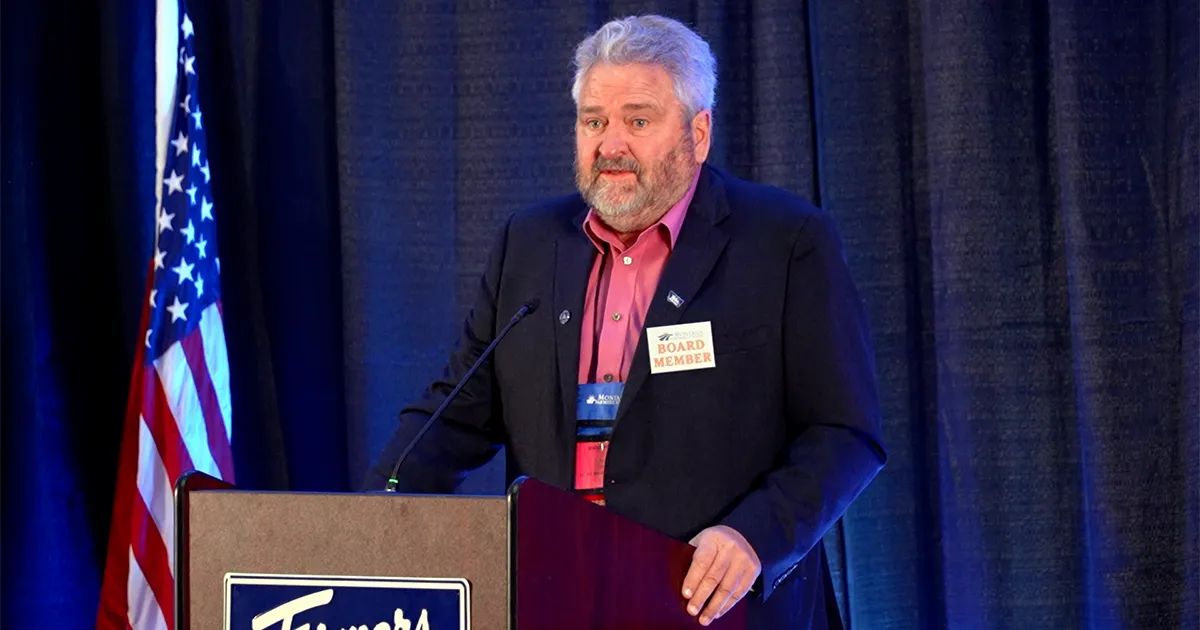
Speaking during the organization's recent annual convention in Bozeman, Schweitzer emphasized the importance of bringing members together to share experiences, develop policy and strengthen relationships across Montana.
“First and foremost, it's networking,” Schweitzer said. “It's getting together with our neighbors and family friends from all over the state of Montana, talking about how our year went, the good things, the bad things, and commiserating a little bit about what's going on in our country right now.”
But the convention serves a purpose beyond fellowship. It is also where members help determine the organization's policy priorities for the coming year.
“Our members get together, they make policy suggestions. There's some stuff that we take out of our policy book, and there's some things that we put in,” Schweitzer explained. “This is really important because it gives us the direction that we move forward for the staff and for our board, so that we can represent our membership when it comes down to policy issues.”
Rising Costs Continue to Pressure Family Farms
Schweitzer says farmers and ranchers are dealing with an increasingly difficult economic environment, driven by high fuel and fertilizer prices, tariffs and geopolitical uncertainty.
He acknowledged that many of the challenges affecting agricultural profitability are beyond an individual producer's control.
“There are a lot of things that are really kind of out of our control, weather being the main one,” Schweitzer said. “But politics and policy, it feels like it's kind of out of our control right now, but it really isn't.”
He encouraged members to remain engaged in the political process and make their voices heard on issues affecting their operations.
Schweitzer believes that grassroots participation remains one of the most effective ways for producers to influence agricultural policy.
Farm Bill Must Address the Crisis in Agriculture
One of Schweitzer's biggest concerns is the ongoing debate over federal farm legislation.
He questioned whether the farm bill proposals being considered in Washington adequately address the economic pressures facing family farmers and ranchers.
“Neither one of those farm bills addresses the crisis that we have here in U.S. agriculture right now,” Schweitzer said, referring to the House and Senate proposals discussed during the interview.
He argued that Congress should prioritize legislation that provides meaningful assistance to agricultural producers rather than rushing to pass a measure that fails to address their concerns.
“What we need is to create a farm bill that helps the family farm, the family rancher, and doesn't focus on the bankers and insurance,” Schweitzer said.
For Montana Farmers Union, those concerns will continue to shape the organization's policy discussions and advocacy efforts.
Education, Farm Safety and Mental Health Remain Priorities
Beyond agricultural policy, Schweitzer highlighted the organization's expanding educational programs and outreach efforts.
He described Montana Farmers Union as the state's oldest and largest farm organization representing family agriculture and said its staff has more than doubled over the past decade.
The organization also relies on ambassadors throughout Montana to organize educational programs, community events and hands-on training opportunities.
Those activities include first-aid instruction, livestock emergency care, fire preparedness, farm equipment maintenance and agricultural safety.
Schweitzer says these programs are particularly valuable for beginning farmers who may not have grown up learning how to operate and maintain agricultural equipment.
“I learned how to maintain our tractor and our combine from my dad and my brothers,” he said. “A lot of these first-time members don't have that.”
To help fill that gap, Montana Farmers Union has developed introductory tractor maintenance classes and expanded the program to offer more advanced instruction.
But one issue Schweitzer discussed with particular emotion was mental health in agriculture.
He said the stress associated with farming and ranching can take a devastating toll on individuals and families.
“I'm sick and tired of going to funerals of friends and family that took their lives, and we need to do something about that,” Schweitzer said.
Montana Farmers Union has responded by offering programs that encourage conversations about mental health and help producers recognize that they are not alone.
Schweitzer pointed to musician Jason DeShaw, who has shared his personal experiences with mental health struggles, as an example of the organization's efforts to reduce stigma and encourage people to seek support.
He also believes everyday opportunities for farmers and ranchers to gather, share experiences and build friendships are an important part of supporting mental well-being.
“It's just sharing your story with your neighbors,” Schweitzer said. “Sometimes it's just crying a little bit together.”
Those connections, he added, can be especially meaningful when agricultural families are struggling financially or dealing with personal challenges.
Data Centers Emerging as Major Policy Issue
Looking ahead, Schweitzer identified the growing interest in developing data centers in Montana as an emerging issue likely to generate considerable discussion among Farmers Union members.
He expects the organization to consider policy addressing how proposed facilities should be evaluated and what role local communities should play in approving them.
“Data centers are the hot-button issue,” Schweitzer said. “I believe that our members are going to pass policy that's going to address data centers and how we see a data center should be passed and allowed.”
Schweitzer believes communities potentially affected by large data center developments should have a meaningful voice in the approval process.
“It really needs to have the vote of approval of the communities that are impacted by it,” he said. “It should not impact our water, and it should not impact our electricity.”
Water policy will also remain a priority as the organization prepares for future legislative discussions in Helena.
“We will be talking about data centers at our legislature, and we'll be talking about water, which is critically important to us all,” Schweitzer said.
He noted that additional legislative priorities would be determined through member policy discussions during the convention.
Younger Members Bring Optimism for the Future
Despite the economic uncertainty and policy challenges confronting agriculture, Schweitzer says he remains encouraged by the next generation of farmers and ranchers becoming involved in Montana Farmers Union.
He pointed to the number of younger members and women participating in the convention as a positive sign for the organization's future.
“We've got a really young group, if you noticed, in our membership,” Schweitzer said. “A lot of women in our membership, and that makes me feel good.”
For Schweitzer, the combination of grassroots leadership, educational opportunities and strong community relationships provides a foundation for the years ahead.
“Here at Montana Farmers Union, we think everything is possible,” he said.
And while the challenges facing Montana agriculture remain substantial, Schweitzer believes bringing producers together, listening to their concerns and advocating for policies that support family farms and ranches will continue to be central to the organization's mission.
Source: Western Ag Network


